

Miniature painting can feel like a puzzle with missing pieces. The right supplies turn a frustrating hobby into a smooth, fun process. In this guide you’ll learn how to pick brushes, paints, primers, and all the extra tools that make a model look its best.
Table of Contents
- Choosing the Right Brushes for Miniature Painting
- Selecting Paints: Types, Brands, and Color Mixing
- Must-Have Primers, Sealers, and Varnishes
- Tools for Detailing: Magnifiers, Airbrushes, and Wet Palettes
- Budget‑Friendly Alternatives and Where to Buy
- FAQ
- Conclusion
Choosing the Right Brushes for Miniature Painting
Brushes are the first thing you reach for when you start a model. The right shape, size, and material will let you hold a fine tip and keep paint flowing. A short bristle with a medium belly is a sweet spot for most detail work. That shape lets the tip stay sharp without soaking up too much paint.
Three things matter most: size, shape, and material. Size 0‑3 works for large surfaces, while -1/0 to -10/0 is best for tiny highlights. Shape‑wise, a pronounced belly holds more paint, but a slim tip gives you better control. Material‑wise, natural Kolinsky sable holds shape for years, but it’s pricey and animal‑based. Synthetic brushes are cheaper and work well for base coats, though they can lose tip shape faster.
Here are three practical steps to pick a brush set:
- Identify the range of sizes you need, at least one fine brush (‑5/0), one medium (‑2/0), and one larger for washes.
- Try a synthetic set first if you’re on a budget. A budget brush pack gives you about 20 cheap brushes for a low cost.
- Invest in a Kolinsky or high‑grade synthetic if you want a long‑lasting tip.
When you test a brush, look for a springy feel and a tip that snaps back quickly. If the tip feels floppy, it will wobble on tiny details. A quick tip from the Loot Studios guide: keep the ferrule clean and never let water sit in the metal sleeve, that’s the main cause of early tip loss.
Budget tip: use a cheap synthetic brush for heavy‑duty base coats, then switch to a Kolinsky for final highlights. This extends the life of your expensive brush.
For more on brush care, see the Loot Studios brush guide. It explains how to store brushes tip‑down and how Master’s Brush Cleaner works as cheap insurance.
And remember, the only brush that lacked a user rating in our data was the $25 Kolinsky brush. That doesn’t mean it’s bad, just that reviewers haven’t posted scores yet.
 Selecting Paints: Types, Brands, and Color Mixing
Paint is what brings a model to life. Acrylics dominate the hobby because they dry fast and clean up with water. There are also markers and spray paints, but acrylics give you the most control for shading and blending.
The research shows Ionic Smart Colors delivers strong pigment intensity and high user ratings.
When you choose a paint, think about three factors:
- Consistency – creamy paints flow well and blend easily.
- Opacity – a good base coat should cover the primer in one swipe.
- Special effects – metallics, contrast, and wash paints each need a different formula.
Here’s a quick way to test a new paint before you buy a full bottle:
- Grab a spare mini or a plastic sprue.
- Apply a thin coat and let it dry for 10 minutes.
- Check coverage, gloss, and how it reacts to a wash.
Mixing colors is a skill you can improve with practice. Start with a limited palette – primary red, blue, yellow, plus white and black. Mix secondary hues as you need them.
For markers, the AK Quick Markers Set is handy when you’re painting at a convention and don’t want a palette.
Pro tip: if you’re after a specific shade, compare the label’s intensity rating to a color chart. That saves you from guessing.
Must-Have Primers, Sealers, and Varnishes
Primer is the first layer you put on a fresh mini. It helps paint stick and protects tiny details. A good primer spreads thin, dries matte, and works in a range of temperatures.
When you spray a primer, watch for overspray. Use a skinny nozzle for small models, it reduces waste. If you’re in a humid room, let the primer dry a bit longer before adding base coats.
After painting, you’ll want a sealer. Sealers act like armor for your paint. A matte spray adds a protective layer without adding shine.
Glossy varnish can bring out metallics, but it also makes washes run off. If you need a shiny finish for a gem or a water effect, a clear gloss brush‑on sealer works well.
Here’s a step‑by‑step sealing routine:
- Clean the model with a soft brush to remove dust.
- Spray a thin coat of your chosen sealer from about 10 in away.
- Let it dry 15 minutes, then add a second coat for durability.
- If the first coat looks cloudy, wait 24 hours and spray a second, smoother coat.
Tools for Detailing: Magnifiers, Airbrushes, and Wet Palettes
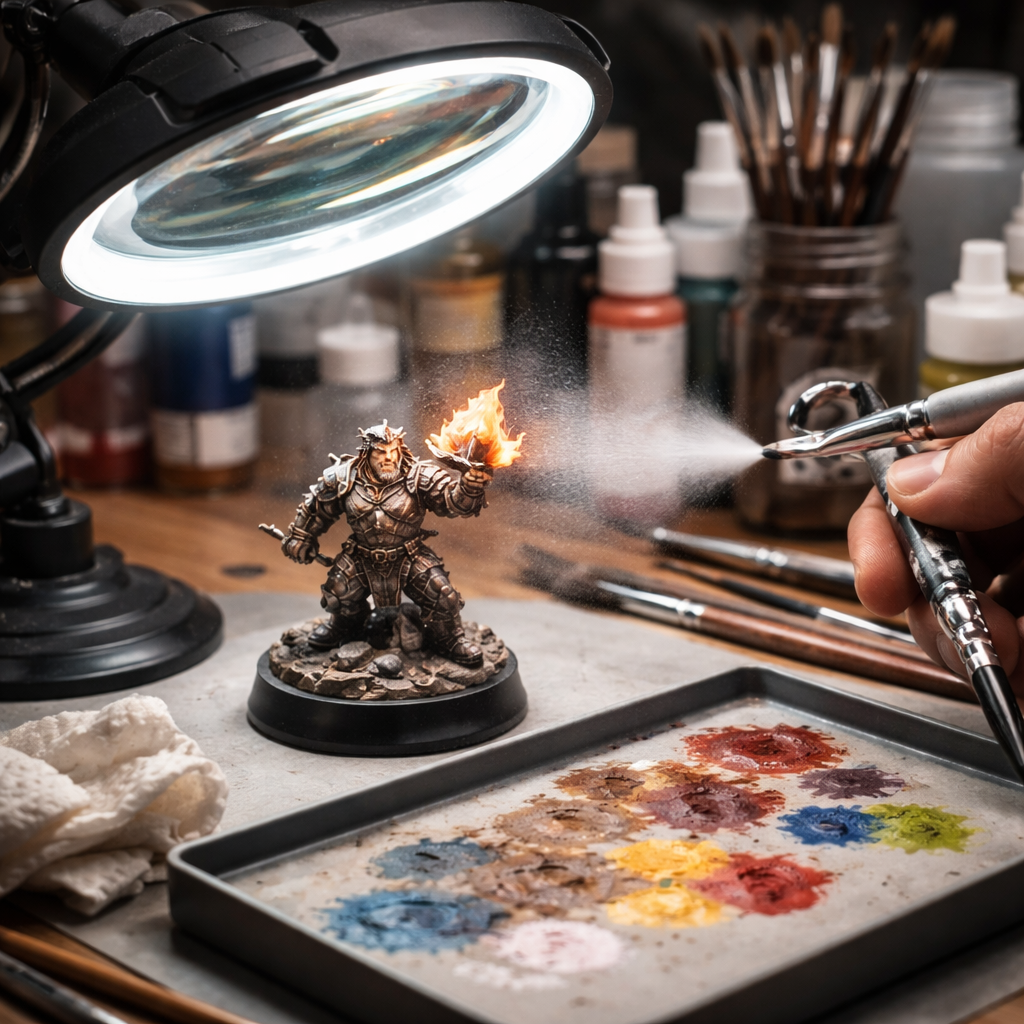
Detail work often needs extra help. A good magnifier lets you see tiny edges without straining your eyes. Look for a head‑mounted model with a 2× or 3× lens and an adjustable stand.
Airbrushes give you a smooth, even coat for base layers and shading. They work best with thin acrylics. Keep the paint fluid by adding a flow improver if you notice clogging.
Wet palettes keep acrylic paint fresh for hours. The trick is to soak a piece of paper towel, place a non‑porous surface on top, then add a shallow well for the paint. The humidity under the paper stops the paint from drying.
Here’s how to set up a cheap wet palette:
- Line a shallow tray with a kitchen sponge.
- Cover the sponge with a piece of parchment paper.
- Put a damp paper towel over the parchment, it should be moist but not dripping.
- Place your paint pots on top and work as usual.
When you use an airbrush, clean the nozzle after each session. A quick dip in water, followed by a rinse with brush cleaner, prevents pigment buildup.
If you need a budget airbrush, catalogs list several affordable options, but be sure to read reviews for durability.
 Budget‑Friendly Alternatives and Where to Buy
Hobbyists often think quality means pricey. That’s not always true. The research table shows a budget brush pack that still rates well for basic work. You can also find bulk‑buy brush sets like the Golden Maple Detail Brush Set for a low price.
When you shop, compare the amount of paint you get per bottle. For example, a 0.7 fl oz bottle of Ionic Smart Colors provides a good volume for detailed work.
Here are three places to look for deals:
- Online hobby retailers often offer bundles for texture pastes, weathering liquids, and airbrush paints. Bundles often save 10‑20%.
- Brush sections in hobby stores, you can find taklon brush sets ranging from three to twelve pieces. Prices are low and the sets cover most sizes you’ll need.
- Online marketplaces or local craft stores, you can often find the budget brush pack or used airbrushes at a fraction of the new price.
Pro tip: buy a bulk‑buy set for tasks that damage brushes, like mixing, applying texture paste, or cleaning. Then reserve your high‑end Kolinsky brush for final details.
Remember the key finding about brush size: the Da Vinci Nova Series 1570 holds 12 × the average paint volume. If you paint large monsters, that brush can save you time by holding more paint between dips.
FAQ
What brush size should I start with as a beginner?
Start with a medium‑belly synthetic brush in the 2/0 range. It holds enough paint for base coats but is still fine enough for simple details. Pair it with a cheap synthetic set for larger areas, then graduate to a Kolinsky or high‑grade synthetic like Da Vinci Nova Series 1570 when you need sharper tips.
Is it worth buying a pricey primer?
Not always. A good primer that offers a matte finish works well with most paints. If you only need a few colors, a small can of primer can work, but it may be more expensive per milliliter.
How do I keep acrylic paint from drying out on my palette?
Use a wet palette. Place a damp paper towel under a non‑porous surface and keep the paint in shallow wells. Add a few drops of flow improver if the paint thickens. This method can keep paint usable for several hours.
Can I use a brush for both base coats and metallics?
It’s best to separate them. Synthetic brushes handle metallic flakes without shedding, while a Kolinsky brush can get damaged by the metal particles. Keep a dedicated synthetic brush for metallics and a sable brush for fine details.
Do I need a sealer if I only play with my mini once a month?
Even occasional handling can wear paint. A thin coat of matte sealer protects the paint and adds a slight buffer against scratches. It’s a cheap insurance policy that keeps your work looking fresh.
Where can I find cheap brushes that still perform well?
Budget brush packs offer about 20 synthetic brushes for a low cost. They’re great for mixing, applying washes, or doing rough base coats. For a bulk option, the Golden Maple Detail Brush Set provides a whole set at a low price and works well for everyday tasks.
How do I choose between markers and traditional paints?
Markers like AK Quick Markers are fast, just uncapped and go. They’re handy for on‑the‑fly painting or travel. Traditional acrylics give you more control for blending and shading. If you’re new, start with a marker set for quick wins, then add acrylics for more advanced techniques.
Conclusion
Picking the right miniature painting supplies isn’t about splurging on the most expensive items. It’s about matching each tool to the job at hand. Our data shows the top‑rated paint can still win high ratings, and a giant‑size synthetic brush can hold far more paint than a typical tip. Start with a solid set of synthetic brushes, add a high‑grade Kolinsky for detail, choose a reliable primer, protect your work with a matte sealer, and use a magnifier and wet palette to boost precision. By following these steps you’ll spend less time fixing mistakes and more time enjoying the hobby. Happy painting!


